Lost in Perfect Translation
Popular culture is championing languages. But what do we lose when we only read instantly translated content, be it subtitles or on Google Translate? Is learning languages as obsolete as they say? Or does it allow us to perceive reality differently?
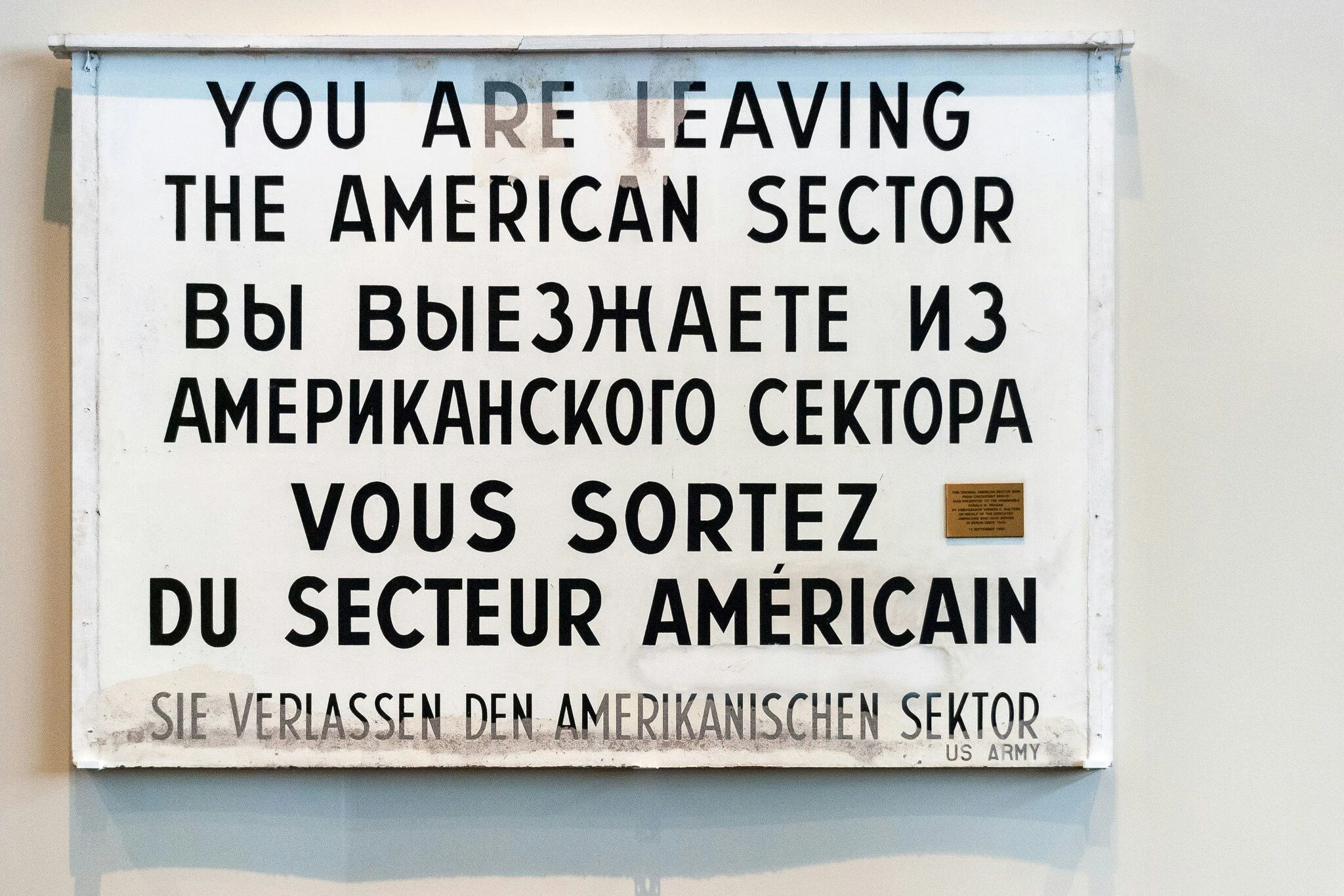
After 18 years, an entire adult life, I returned to learning French. Ten months. Weekend classes. Not Duolingo. Finally, certified. The school version of me, who wrote verb conjugations in ruled notebooks, would be proud.
But why now? Why in a world where instant translation and auto-generated subtitles are commonplace? When I didn’t need it for a job or travel. And when research is divided on whether learning a new language provides any real health benefits at all?
So, if access is everywhere and immediate, why bother learning a language at all?
Language as Sight, not Sound
I got into watching anime seriously in India back in 2010. At the time, dubbed content was rare, and you were lucky if you found simple English subtitles. Fast forward to today, where near-instant dubs are even possible, but I still default to Japanese audio with subtitles. Why? Because the Japanese audio just feels more real. The gravity of emotions — even the best dub can’t seem to do the original content justice.
Earlier this year, I watched Drops of God, a trilingual show in English, French, and Japanese. After recommending it to many who didn’t find it as amazing as I did, it eventually hit me. The show requires that subtitles be followed, but it needs all 3 languages to be felt. Each language adds a layer to the same content, making for a textured viewer experience.
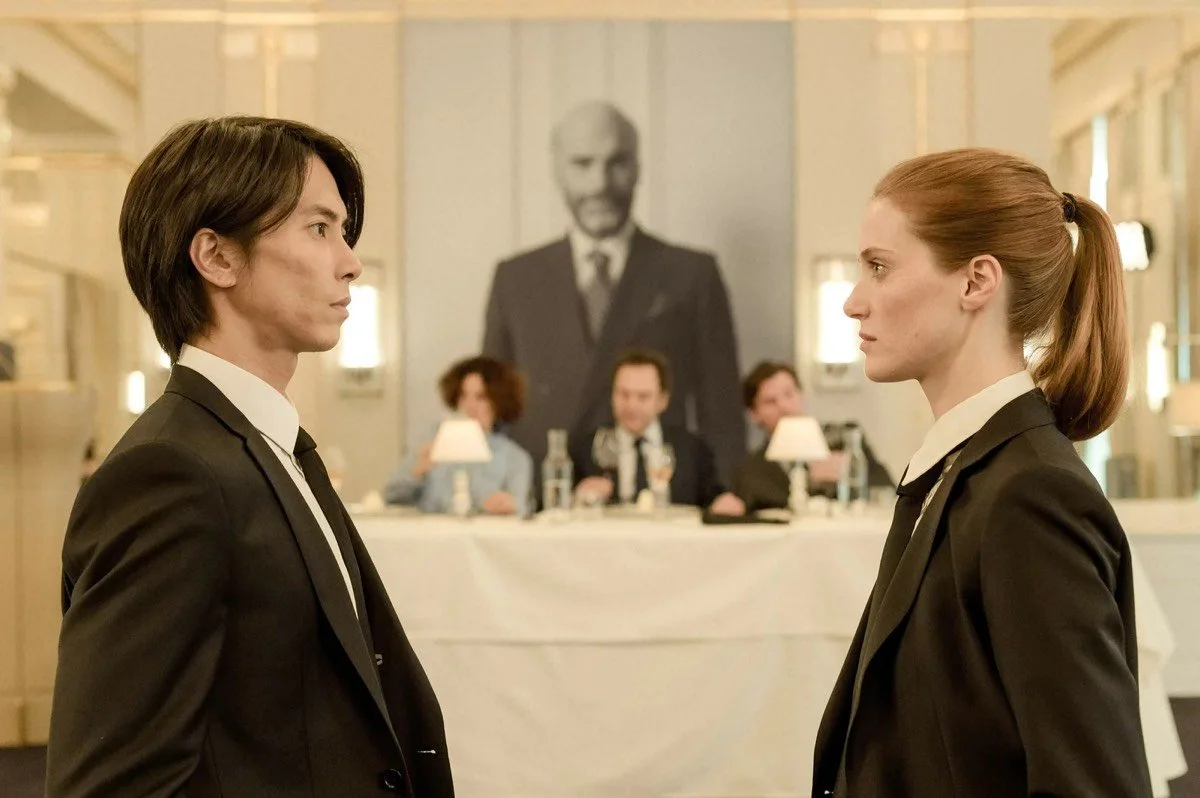
In Drops of God, Camille’s trilingual fluency gives her an advantage over her rival, Issei, in decoding famous wines and their backgrounds. Image Credit: Apple TV
This realisation made me see my Switzerland trip in a new light. In one small country, I had to keep up with language switches between German, French, and Italian. Sometimes, on the same train. This wasn’t about the need to become a polyglot. It’s about how language shaped the rhythms of life. Volumes, greetings, attentiveness, and more.
Here’s what we need to see differently. Language isn’t just a sense of sound, of being spoken and heard. Language is the power of sight. As John Berger would say, it’s a way of Seeing. Not Saying. Not just communication but observation. That’s why the Japanese-spoken Shogun and Korean-spoken Parasite seem better. You’re seeing new worlds with the power of language. But simply seeing subtitles is the tip of the iceberg. There is so much more to perceive.
Translation ≠ Transference
As someone working in advertising, I’m used to words being dissected and debated to death. Languages are stretched to their seams. But one thing happens more often than not. No matter your fluency in English, there are moments when it fails you.
You fall back on a language like Hindi. You reach for ‘sukoon’, a word that resists like-for-like translation. The closest word, ‘comfort’, feels cold by comparison. ‘Sukoon’ is warm. Felt. Heavier. Textured. Try other words that play around with Hindi and Urdu. ‘Rooh’, ‘Sabr’, ‘Fanaa’. You’ll probably struggle for the same reasons.
Try French. ‘Ça va’ is used in two ways: “How are you?” and its resulting answer. While English speakers may detail their feelings in response to such a question, the same words in French limit emotional engagement. Another phrase, ‘Il me manque’ translates to ‘he is missing to me’. The focus here is not on ‘I’ but on the absence itself. It’s as if a part of you is now removed with the act of missing. Here, the emotions run far deeper than their English translation.
These are the moments where Google Translate fails. It chases accuracy but loses out on energy. Because each language plays to different strengths.
English lets you name things quickly.
Hindi makes you feel them.
French lets you linger in the space between.
These incompletely translated words aren’t just about vocabulary gaps. They are proof of different perceptual frameworks. Different ways of seeing that are embedded in their system.
And yet, English isn’t emotionally hollow. It has the power of compound and multiple words. Think ‘bittersweet’ or Coke’s longstanding tagline, ‘real magic’. Words that also create layers.
This is one truth of language: Translation gives you content. But language gives you context, texture, and energy. This richness in linguistic texture is what makes language preservation so important. Without that, translation feels flat, almost a 2D drawing of a 3D object. Or worse, a lost way of seeing the world. And that is happening at an alarming rate.
Languages are Dying. With them, Ways of Thinking
Switzerland has a fourth national language, which I didn’t encounter in my travels. Romansh, with approximately 40,000 active speakers today, is classified as a ‘threatened’ language. Despite preservation efforts, the language is in decline.
In West Africa, Microsoft stepped in to help digitise Pulaar, a language that had no written script (Like the ABCs of English). The resulting alphabet was ADLaM, an acronym for ‘Alkure Dandayde Leñol Mulugol’, meaning “the alphabet that protects the people from vanishing”. The effort and its resulting popularity, because of two Cannes Lions Grand Prix (arguably the most prestigious awards in advertising) awarded to Microsoft, have given the language a chance to survive with increased global visibility. But this alone will not be enough.
We’re increasingly being told we don’t need to learn languages anymore. And, for technical needs, they may be right. Major languages are dominating, and linguists are warning of multiple languages at risk of extinction. It’s Byron Sharp’s laws of double jeopardy applied to culture. Bigger languages (by and large) are getting bigger. Smaller ones are at risk of disappearing at the rate of one language every three months. By 2100, we could permanently lose 90% of the world’s 6,500 languages. With them goes vocabulary, but also vision. Not just the power to describe but the power to think differently.
Such examples are all around us. An MIT Research found that members of the Amazon rainforest’s Tsimané society started classifying colours into more words after learning Spanish as their second language. Tsimané are monolingual, but the research proved that new words such as blue and green emerged. Not by copying Spanish itself, but by crafting new words from the Tsimané language. The Hopi Tribe of Native Americans perceives time as cyclical, not linear, with discrete segments of days, weeks, and months. No past, present, or future tenses. But not every language is so lucky. Hopi is recognised as a ‘vulnerable’ language today.
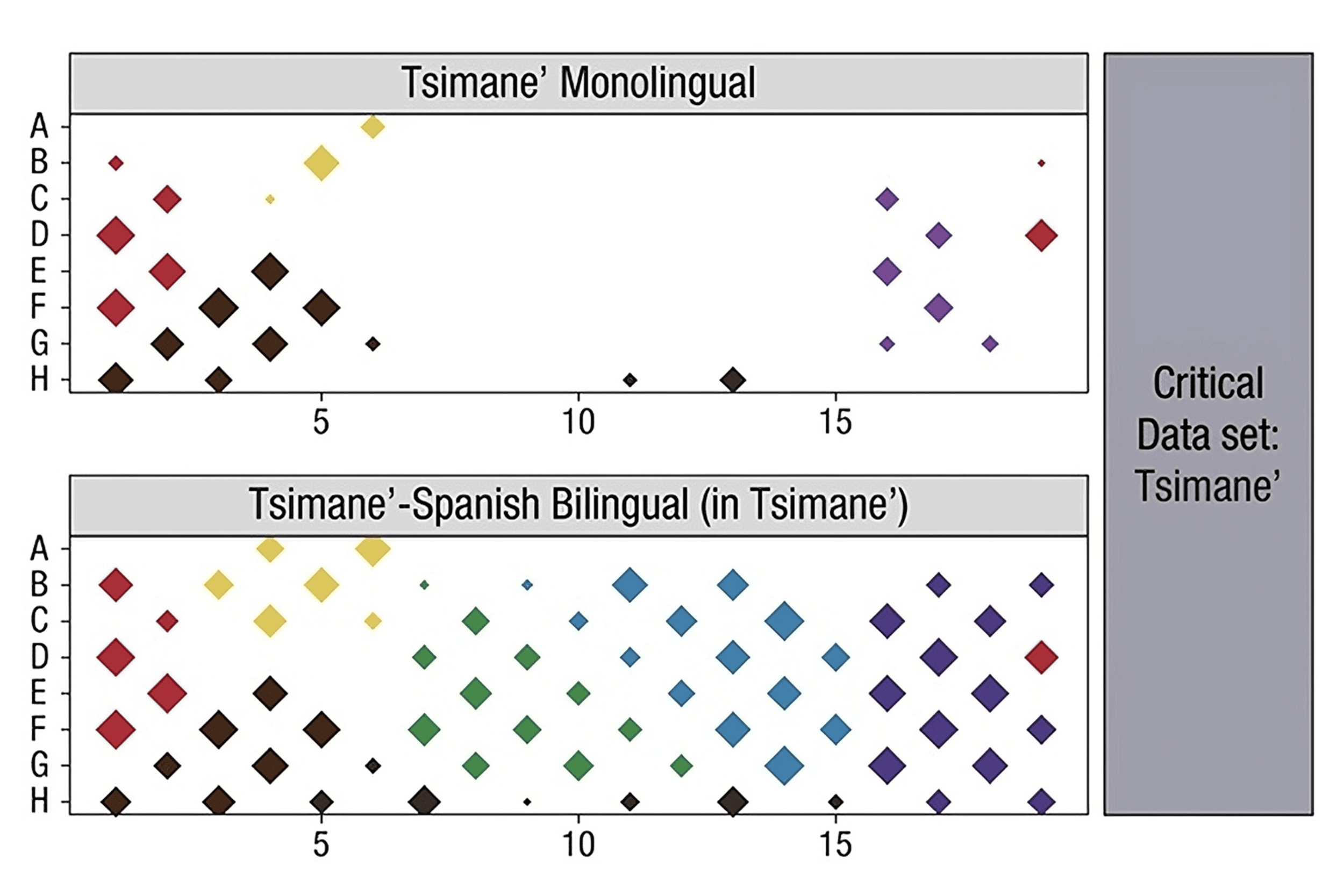
Researchers observed that the Tsimané started seeing a broader colour spectrum after learning Spanish. Image Credit: Science Alert
Preservation can prolong a decline, not reverse it. So don’t just preserve. Practice. Practice for a textured vision of today and tomorrow. And maybe, we too can develop a perception that transcends our monolingual limitations.
Language as Higher Perception
It’s time to reframe how we see languages.
Not as a utility. But a chance for intimacy.
Not as a transaction. But as a deliberate slowing down in an age of acceleration.
Not something to translate. But something to feel.
Think of it as a ‘dimensional unlock’. The more aware you are, the more planes of existence you can see, like in Jonathan Stroud’s Bartimaeus trilogy, where magicians and spirits perceive multiple planes of reality invisible to others. Each new language gives you new words that, in turn, enable you to see new patterns, connections, and emotions. Just as the Hopi see time differently and the Spanish-learned Tsimane see new colours, each language unlocks dimensional access uniquely.
In a world where everything is immediately accessible in subbed and dubbed, languages could be one of our last doorways to learn how other people live, speak, and see. Something only a few can experience and rightfully deserves the time to unlock. Not so we can draw 3D as 3D, but perhaps envision a fourth dimension too.
Therefore, learning a language isn’t about developing linguistic fluency or embellishing a resume. It’s a cultural cipher that rewards curiosity with surprise. When shopping at a grocery store in France, you may discover that items are counted in numbers, but back in India, it’s an obsession with weight. Aadha kilo, ek pau. Same act. Different ways of looking at value.
Because while translation may get you there, language lets you arrive. Arrive at a station you didn’t even know was there.
So, which dimension of human experience will you unlock? What invisible world will you make visible with the next language you will learn?
