The Supervoid of Employment
Every major workforce disruption pointed to what comes next. The Industrial Revolution, the Information Age — each left a gradient. This time, AI has removed it. Welcome to the supervoid.
Every few months, a new talent report comes out. A new list of jobs that will cease to exist soon. A new reason to marvel at plumbers and electricians. These individual disruptions — coders moving to client servicing, content writers trying their hand at strategy — are no longer isolated events. They are coalescing to create something larger. I call it the ‘supervoid’.
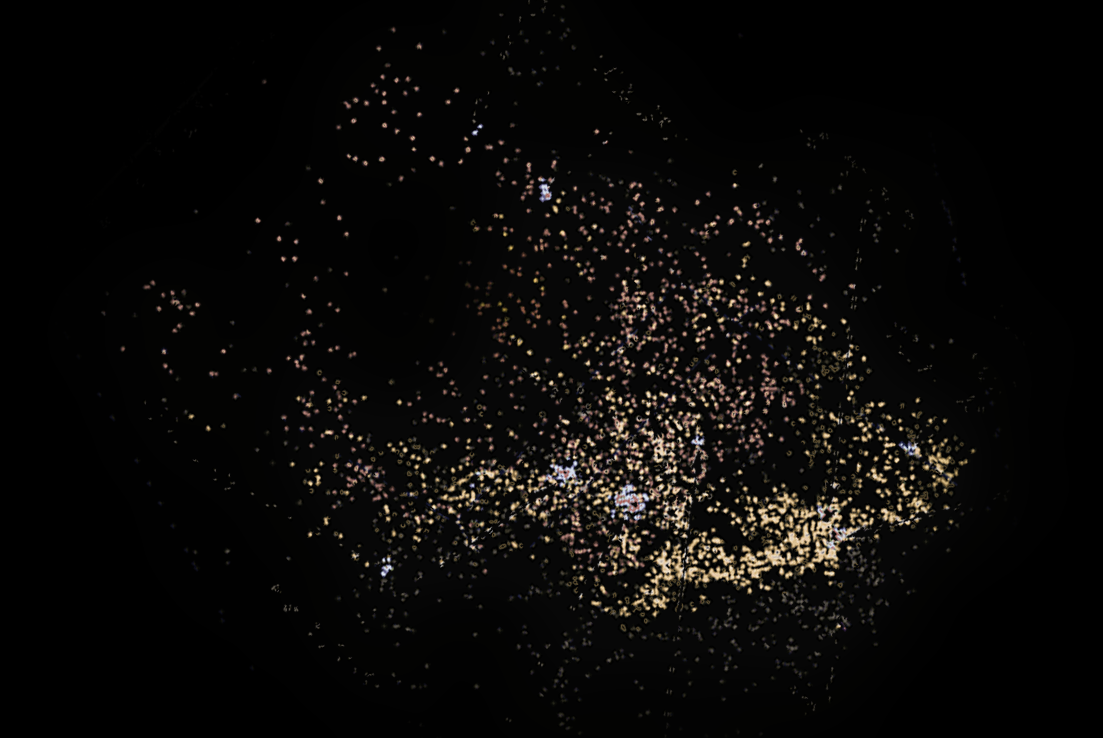
What connects a Space term and Unemployment with AI?
A supervoid is a scientific term for a large expanse of space with an apparent absence of galaxies. But despite its apparent blackness, a supervoid is not a black hole, nor is it empty. The stars exist, and the light hasn’t vanished. It’s just moved elsewhere and redistributed itself in ways we cannot yet understand clearly.
Jobs have a history of being voided. These voids have been followed by new job creation. Previous disruptions left a small light at the end of the tunnel, a ‘gradient’ about which way the market was shifting. The Industrial Revolution heralded a reduction in physical labour. People then moved from factories to services. The Information Age disrupted print and retail, as people migrated online. Each of these transitions was sequential and pointed towards the next viable destination.
Today, the nearby jobs we would go to are also vanishing, as this job loss is happening almost simultaneously. Multiple voids are coming together to create a supervoid and remove the gradient entirely. This is unlike past transitions that first took out lower end of a sector’s jobs. Think Claude Code, a Google Stitch update, and a Qwen image layer — each void arriving within weeks of the other.
According to the World Economic Forum’s Jobs Report 2025, multiple sectors, such as manufacturing and service, have been disrupted simultaneously for the first time in history, driven by AI and other macro factors. Academics are watching as AI-assisted teaching guts their jobs. Techies are questioning the endless certification race. Some small town workers are using AI to start businesses — or so ChatGPT’s new ad would have us believe. Talk to people across the globe, and the fear of job loss is replaced by a more unsettling question: “What do I do next?” This question is about the loss of gradient. This is the supervoid.
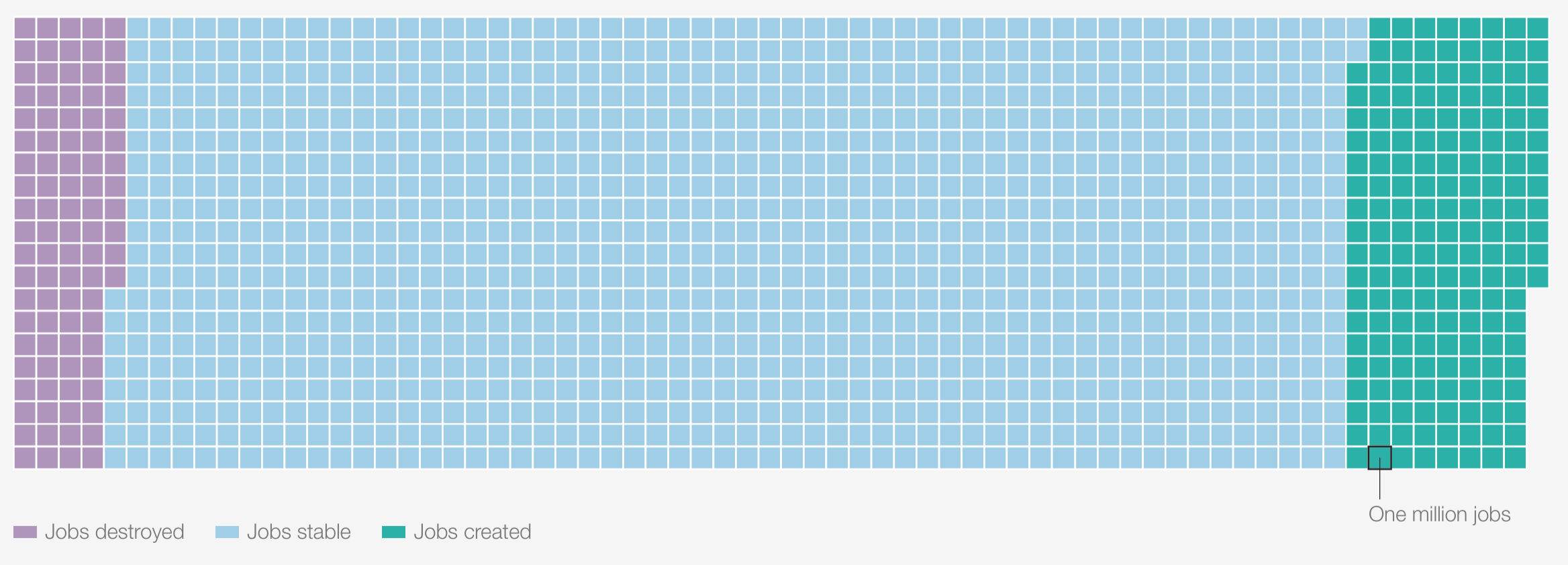
By 2030, nearly 1 in 4 jobs (22%) will see a churn as part of changes in the structured labour market, based on 1.2 billion formal jobs studied. Image Credit: World Economic Forum Future of Jobs Report 2025
What are People doing right now?
There are usually four ways people deal with the supervoid.
Seek brighter elements nearby – When in darkness, we look for light. We upskill and pivot, finding an adjacent field that’s deemed “safe”. But when the nearest light source may be next in line to be swallowed, we have to pivot constantly. It’s exhausting to stay even one step ahead, let alone three.
Turn your attention elsewhere – It’s no surprise that the largest galaxies are found in dense clusters surrounding a supervoid. We, too, gravitate towards the big, dense events. The next blockbuster release. The next sports tournament. A niche hobby. Definitely not war(s). This temporary bright light means the supervoid is forgotten, if only for a moment.
Close your eyes, shut it out – If everything around you appears to be black and empty, the real world feels a little less scary. If everything’s a supervoid, what is there to fear? Classic denial, like not opening your credit card bill. The number doesn't change. The interest just goes up.
Believe things will get better – Assume new jobs will emerge. They always have, so far. A universal basic income will ensure economies don’t collapse. Physical jobs will be the least replaceable — From whatever smatterings of news and opinions exist, we construct hope. Because the alternative is far worse.
Whatever your escape, it feels better than drifting without clarity, as inertia takes us onward indefinitely. Except here, the end is clear even though the path isn’t. Being truly directionless is its own kind of loneliness.
So, where do you find the direction? The light? The gradient?
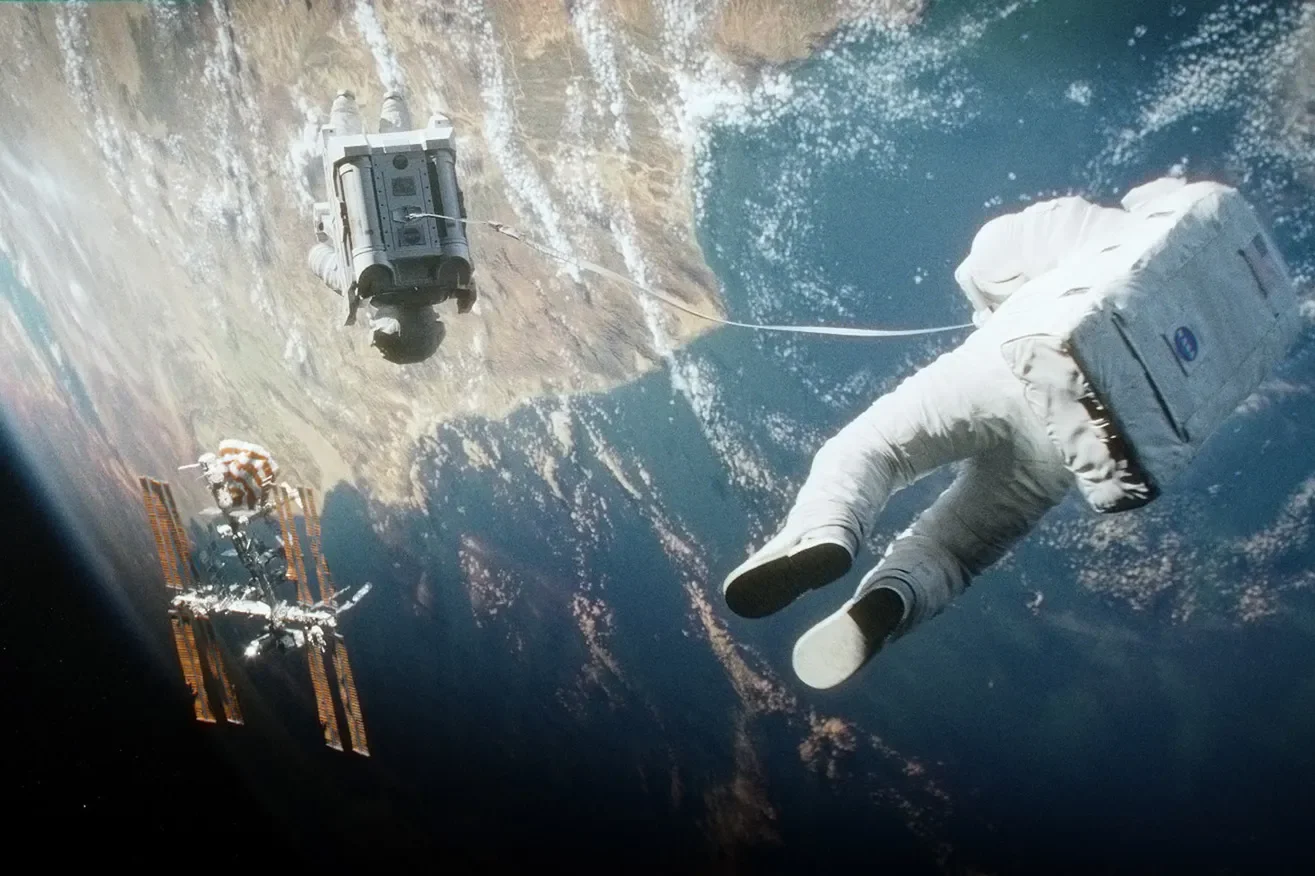
A high-tension opening sequence from the movie ‘Gravity’, where Sandra Bullock’s character spins uncontrollably after becoming untethered from her shuttle. Image Credit: Warner Bros. Pictures
What a good Astronaut does when there is No Horizon
Tether – In the absence of a gradient, it’s easy to get swept up in both the hype and the reality. To keep upskilling. To keep hustling. Resist this urge. Before the enormity of this change creates a new supervoid in the pit of your stomach, find something to hold on to. What job today is good enough for the next year or two? Build from there.
Orient – In space, there is no natural horizon. You need a fixed reference point to find your bearings. Find the sunrise industries that come up because of the limitations of AI. The stars that burn brighter because of problems that become harder as AI advances. Where is human skill and judgement irreplaceable? Those are your fixed stars. They don't tell you exactly where to go, but they help you reorient as to which way is up.
Propel – This is the most challenging one. In space, you need a force to generate momentum. And doing so is scary because you don’t know where you will end up. But if you have to extricate yourself from the grip of blackness, momentum has to come from within. Against all science, build your own hope engine, and work towards the future relentlessly. This willingness to move forward without any natural force and guaranteed endpoints is the one feature AI can’t replicate. What seems irrational is our biggest advantage.
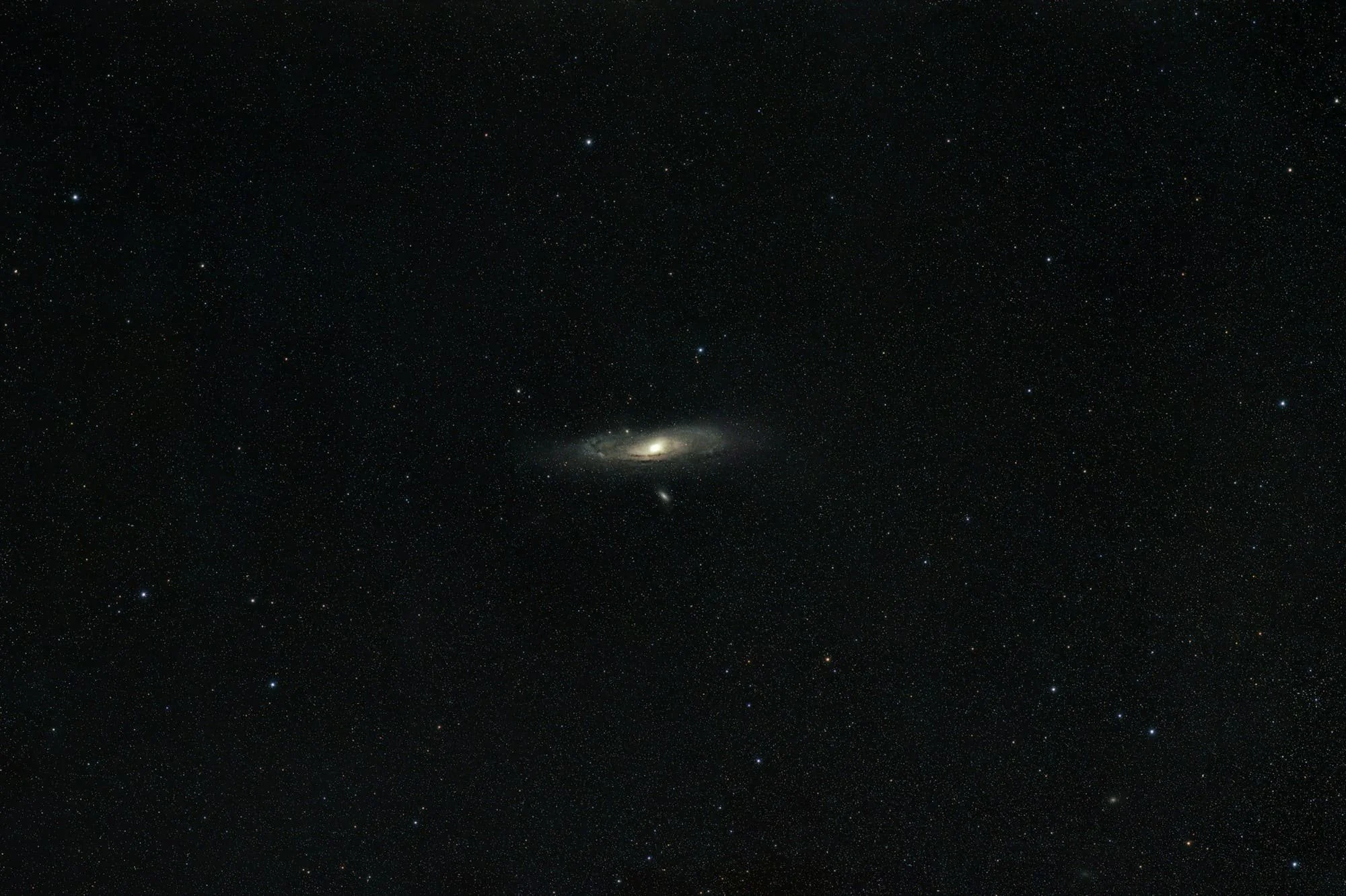
Even our nearest galaxy, Andromeda, looks empty when zooming out, despite being one of the most densely packed regions in the observable universe. Image Credit: Adrian Mag/Unsplash
When you find yourself feeling anxious, take solace in the cosmic timescale. The voids we see today could be the remnants of stars that died millions of years ago. Things may feel like they are happening faster than before, but space-time is long. It's enduring.
The vast expanses of space are voids. Not black holes. Not empty. But low density. And in that area is room to build. In cosmic time, humanity will find new solar systems to populate. New stars to become our sun. In human time, we will create new forms of employment from this disruption.
The gradient will emerge. It just hasn't been redistributed yet.
