The Wonderful Strangeness of Goosebumps
In a world engineered for stimulation, a biological remnant has found a higher purpose. But can we preserve this last real signal of being genuinely moved?

You’ve been there. The slow rise of hair on your arm. The shiver that has nothing to do with the cold. Your smooth skin, suddenly textured by innumerable little dots. A sign of your body’s response to something your brain hasn’t caught up to yet. Goosebumps.
I felt them on Tuesday after a long time. YouTube, not usually on, was autoplaying music in the background for over two hours while I was in deep work. Ambient noise while I was lost elsewhere. Not listening. Not looking. Just letting it run. Then, a song came on from a show I’d raved about last year and seemingly forgotten since. The goosebumps had arrived.
I didn’t go searching for them. I wasn’t in the mood for anything meaningful or philosophical. It was a moment uncurated, and it snuck up on me. In my blind spot.
This isn’t about that song or a TV show. This isn’t a nostalgia trip. It’s about a sensation far older than the languages that exist to describe it, that arrived when I wasn’t watching for it.
What made the bar so high for such an involuntary response? And why does it matter?
The Engineered Serendipity Trap
High quality and careful emotional calibration is the default now. The algorithm has learned this about us and regurgitates the same. From Netflix to Spotify to Google Maps, we are rarely disappointed.
We have become tolerant. Not of “bad” content, but of stimulation itself. We settle for an “okay” song when the search itself feels like a chore. A TV show that was edgy in season one and is comfortable by season three. The more personalised our consumption is, the lower our threshold becomes for an authentic response.
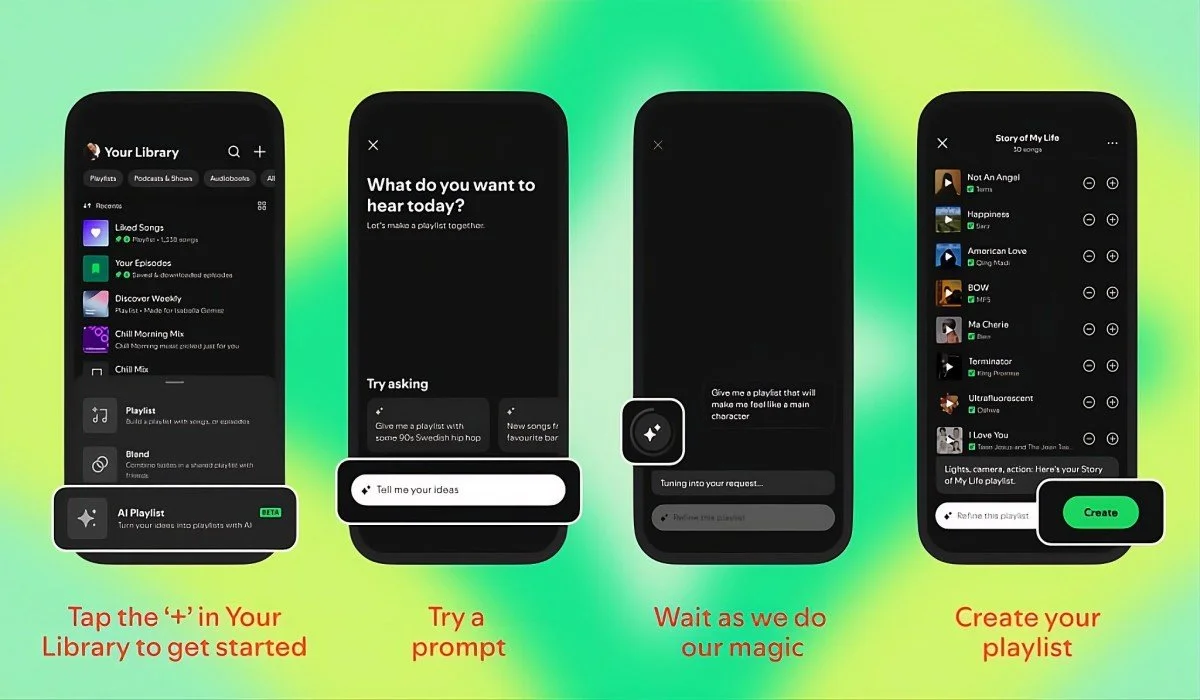
Spotify’s most recent innovation lets you engineer serendipity by typing in prompts rather than actively choosing songs. The algorithm constrains you by design. Image Credit: Fast Company/Spotify
Deep down, we recognise this itch and turn on our Discover Modes to compensate for it. Spotify’s Discover Weekly and, of late, AI Playlists. Instagram’s Explore page. An old internet radio station playing 2000s rock. We try to engineer the feeling of ‘serendipity’, of genuine surprise arriving without intent, with the minimum effort and even less uncertainty.
But designed serendipity, outsourced to platforms, is still optimisation. These platforms are designed to give us tiny emotional spikes within carefully defined parameters. Statistical randomness, just different enough to feed us what we like. We are never caught off guard. Never badly surprised. Never emotionally ambushed.
Real serendipity requires us to step outside our known range. It’s the difference between a knowledgeable friend taking you to a restaurant they know you’ll like versus a stop at an unknown highway dhaba. Both can be good. Only one leaves you emotionally exposed. Only one can give goosebumps.
The Merits of the Vestigial
Goosebumps were never meant to outlast their purpose. They are vestigial — evolutionary leftovers from a world where external threats required an immediate physical response. Today, that purpose has vanished, but the biological reaction has stayed.
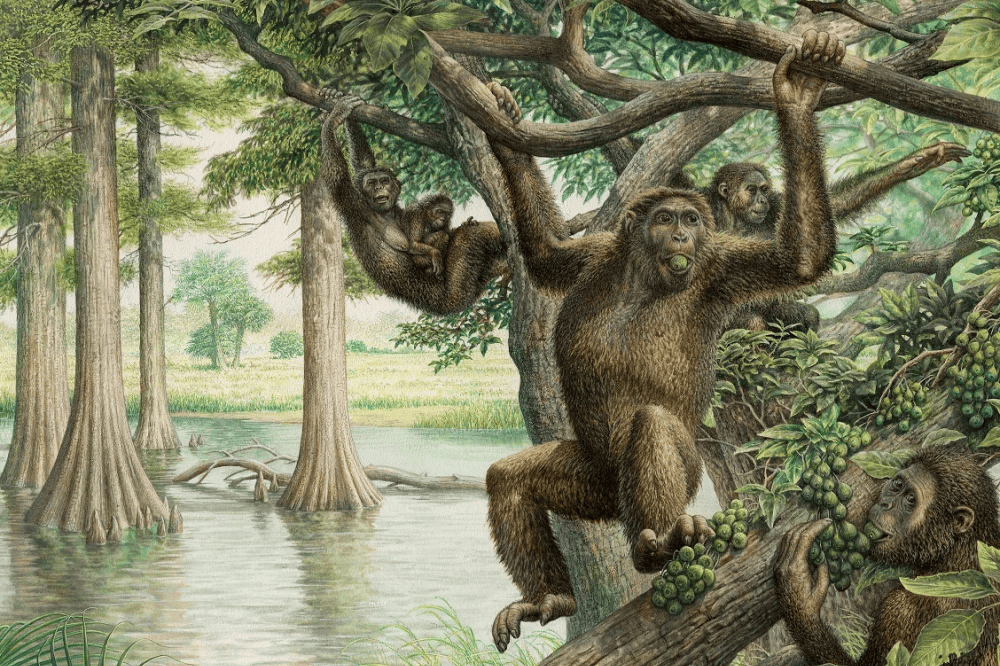
A hand-me-down from our ancestors, goosebumps and resulting hair rising used to help us increase our size in response to prey and warm ourselves in a sudden weather drop. Image Credit: John Sibbick / University of Missouri
Somewhere along the way, goosebumps have found a second life. In the body’s honest response to the meaningful. Music. Speech. Kindness. Not curated by an algorithm nor well produced. Just what matters in the moment, before we have the time to decide how we feel about it. Because we needed something that could not be faked.
In a world of increased emotional engineering, goosebumps are one of our last involuntary physical signals. No performative tears or smiles. Just authentically being moved. They don’t follow logic and, by their nature, are unpredictable. The same stimulus may not result in goosebumps a second time. That’s what makes them impossible to reproduce.
Over-calibrate and you lose the ability to tell what really affected you from what was designed to make you feel like it did.
How to go Primal again
Let’s go back to that Tuesday. There was no active choosing or thinking about what others thought. I wasn't looking, and I wasn't watching myself either. That's what made it possible.
Most of us never stop observing ourselves. Every activity is logged in our minds like browser history. We already know what's happening, so we always know what's coming. We have surveilled ourselves into predictability. The conditions for goosebumps can only be found in the corners we forget to monitor. These unmonitored corners are where real serendipity hides.
This is less of a question about what to do and more about what to stop. Stop watching. A playlist where you aren’t tracking the next song. A book begun without reading the synopsis or reviews.
This is not an argument for doing random things or for boredom. Even spontaneity becomes a “managed” action. What I suggest is simpler, yet harder. Don’t relinquish control entirely, but stop the self-surveillance of certain corners of your life. The goosebumps didn't happen because I decided to be less present. They happened because I wasn't monitoring that corner at all.
To stop surveillance is not a guarantee of goosebumps. But it reopens the corners where the unexpected can still arrive before you have decided what to feel about it. Not for goosebumps, but a life in which they remain possible.

Start thinking of goosebumps as fingerprints. The only signal that’s entirely yours and that can’t be faked. It’s more than a verification of your identity. It’s a verification of feeling something. Image Credit: Cottonbro Studio/Pexels
A Condition Worth Protecting
Goosebumps have survived millennia of evolution but are at risk today. The biological, physical sensation may stay, but it is the mental one that is far more sacred. The involuntary signal of something that mattered. It is the one worth protecting against our nature to overmanage, over-calibrate, and self-surveil.
While biological evolution isn’t reversible, this can be. You can’t grow back hair, but you can leave space for a blind spot. A deliberate blind spot where the periphery serves up the unexpected.
Goosebumps are not the end goal. Being open to them is. A balance that enables us to be open to receiving and unguarded in responding. Such a vulnerability unlocks a pleasure we experience less and less: the not-knowing. Before we process, decide, or share. This gap, however brief, is where goosebumps have always lived.
Stop optimising goosebumps into existence. Leave the door unguarded. When control briefly leaves the room, the goosebumps will find their way in.
