Termism: The Power and Problem of Naming Everything
We name things to feel in control. Quickly. Trends, behaviours, and even ourselves. But when everything demands a label, are we just taking shortcuts, allowing these labels to settle far deeper than we realise?
Every week, we find new terms that spawn news cycles. Bed rotting. Quiet quitting. Coffee badging. They adorn the title pages of trend reports, sneak into news articles, and eventually spread like wildfire across YouTube comments, Subreddits, and LinkedIn posts. Like linguistic viruses, these words sneak up and infect our conversations for a week, and if more virulent, a month. Till the next one comes around.
Welcome to the era of termism.
Naming at the Speed of Culture
We know how this story goes. Information is exponentially multiplying, attention spans are shrinking, and the world is increasingly uncertain. But is there something deeper at play? Why are we so compelled to name everything?
The act of naming is, at a fundamental level, the first stage of understanding. A fix on a baby’s budding personality. A nickname for an anamorphic doll. An ocean indistinguishable from the other, separated only on a map. Until we name them. Jolly. Molly. Pacific. Atlantic. And lo and behold, they have meaning.
Naming is power. The power to ‘materialize’ thought into real life. To turn the abstract into the tangible. To sublimate chaos into cognition. Around which we accrete meaning. We once named Gods and natural phenomena that we didn’t understand. Today, we name smaller things — moods, emotional states, mild rebellions — as we navigate personal and cultural flux. But unlike before, these names don’t come from academics or institutions. They emerge on Instagram, TikTok, Reddit, or even on the most recent season of The White Lotus (this place is “clutch”).

Interestingly, the same meaning of the word “clutch”, used in The White Lotus, dates back to 2006 in The Urban Dictionary. Image Credit: HBO/Warner Bros. Discovery
Anyone can name. What gets picked is now a matter of algorithmic power, not of structure: Is it relatable? Possibly meme-worthy? Definitely Shareable. The result is a new kind of democratised narrative control.
The Labels We Grow Into
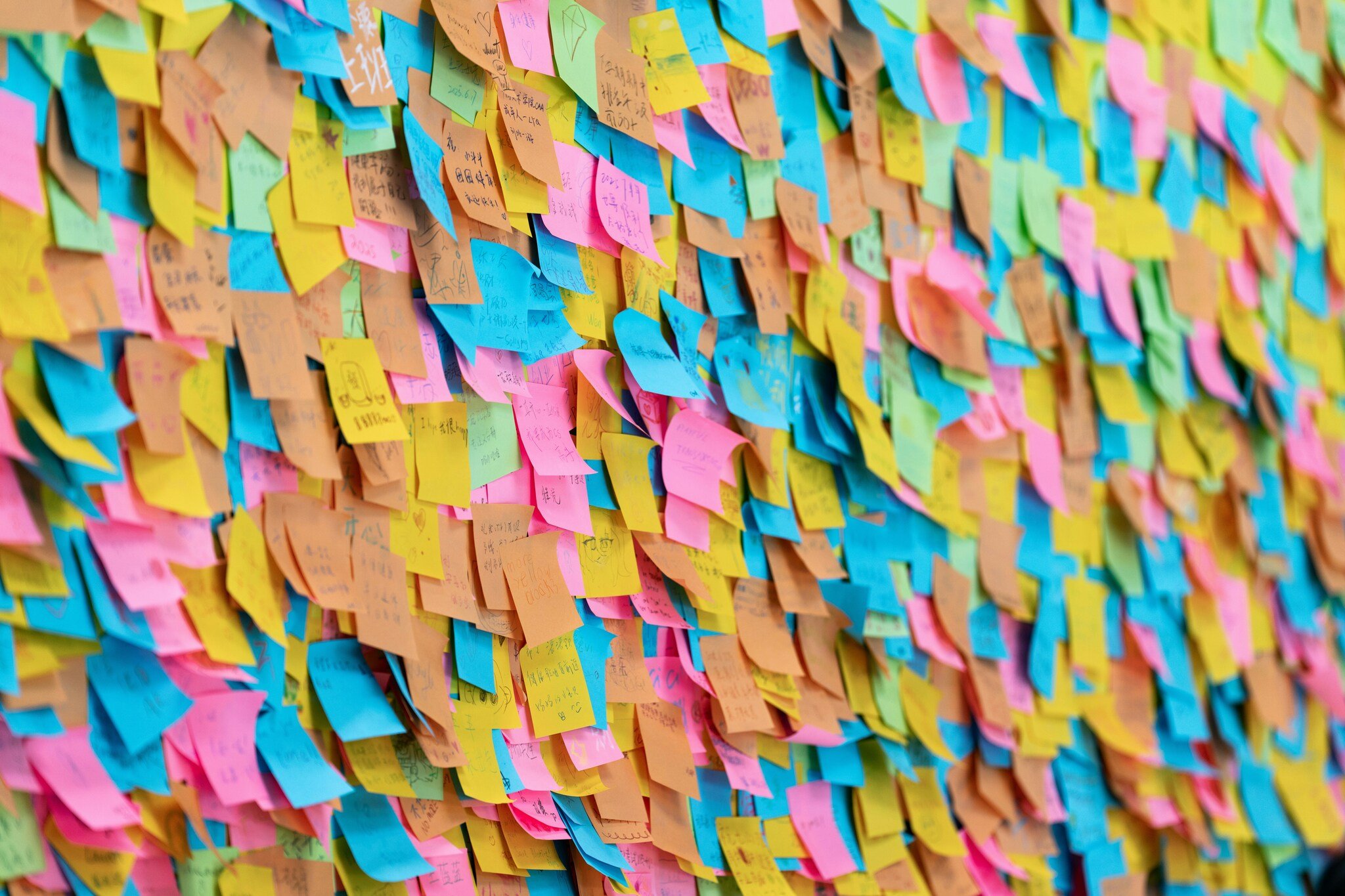
Naming gives power because it shapes not just people and the world around us, but ourselves. We’re all walking notebooks full of sticky notes. Many of these are the same feelings repackaged in new colours.
Many of these sticky notes come in different colours as the repackaged familiar. At its core, ‘quiet quitting’ is about maintaining boundaries. ‘Green flags’ are a sign of emotional maturity. Once you’re labelled, it’s who you are. But we can’t stop at green. We need red and beige to provide contrast. Maybe next, we’ll invent blue and yellow.
When the colours (eventually) run out, or the next phrase catches on, you may find yourself wondering — “But this has always existed”. In most cases, you would be right. ‘Bed rotting’ is rest after an intense few days/weeks. These words aren’t inventions; they’re reinventions. Cultural acknowledgements of how we reframe ourselves, every now and then. Together, these names, these sticky notes, these labels, become micro-identities that accumulate.
One could argue that reframing is good for you, a part of self-reflection. But human beings aren’t putty. Consistent reshaping of yourself doesn’t make a better you with no memory of your past self. Consistent terming and re-terming come with their risks.
When Our Words Work Against Us
One might assume that with a world of ‘global citizens’, AI-powered real-time translation (Read my essay on how languages affect our sense of perception), that names have precision-like travel. But just like a game of Chinese whispers, meaning mutates.
From the moment they are birthed into the public domain, these terms are disproportionately memed, remixed, and redefined, sometimes beyond recognition.
Risk #1 - Dilution
Terms often have deep, cultural meanings that get forgotten when used. No one expects to remember the documented histories of words, but sometimes, not knowing means a less potent term. Take ‘gaslighting’, a term originally meant to highlight psychological manipulation in abusive relationships. Today, it’s casually, even humorously, thrown around in everyday disagreements. Stripped of context, its original concentration is diluted. A weaker formulation that does more harm than good to those who need to use the term in its truest sense.

The popular term ‘gaslight’ first reached mainstream audiences in 1944, through the movie, Gaslight. The movie shows how a man manipulates his wife into thinking she is losing her mind by secretly dimming gas lights in their home. Image Credit: Warner Bros. Discovery
Risk #2 - Oversimplification
Another outcome of diluted meaning is the risk of complexity being compressed. When messy experiences are compacted into neat soundbites for universal understanding, they promote shallowness. ‘Mental health’ is arguably more accepted as an issue facing younger people. But it speaks to a variety of conditions. To name just a few — depression, schizophrenia, and bipolar disorder. When we don’t go deep and stick to the surface, we lose texture, the graininess of what these lived experiences are. Simplicity on top of more simplicity doesn’t compound meaning; it just reduces it.
Risk #3 - Othering
Terms that are meant to simplify understanding often reinforce bias or begin a stereotype. Picture a girl who is ‘bed rotting’, does ‘girl math’, and is planning to ‘coffee badge’. She isn’t an individual, but rather, a punchline. Instead of being digestible facets of her personality, these labels define her. What starts as shorthand to reduce brain processing reduces people’s identities to a meme. Against which we define ourselves. And the more we name, the more we risk distancing ourselves from who people and lived experiences really are. A compound Chinese whisper.
Risk #4 - The Positives that follow the ‘Negatives’
This risk hasn’t fully played out, but it is worth keeping an eye out for. When positive terms follow negative ones, they could potentially reinforce the cages they want to break. ‘Girlboss’ is commonly understood as a positive affirmation of a career-forward, successful, decisive woman. But if ‘girl math’ precedes the term, it can imply that girls lack the financial capability to succeed. Ambitious, but not good with money. Sequence matters more, especially when these terms become System 1 memory. There is already a study around the ever-increasing gap in mathematical understanding between girls and boys from the first grade onwards. One possible reason mentioned is the fact that many girls internalise that math is not for them. That harms them in the real-world when they grow up, as mathematical fluency affects how they engage with the world.
How We Tell the World Who We Really Are
Despite how quickly they seemingly disappear from common memory, terms aren’t throwaway phrases anymore. While Termism helps us create mental anchors in a changing world, we also need to stay alert to the hold these labels have on our subconscious mind. One by one, these microlabels shape reality.
Naming was always going to be about power. About the first inflection point, where we start making sense. The faster news cycles of today mean more terms thrown at us. But to simply dismiss them as a side-effect of fast culture or tech democratisation is to miss the quiet revolution in how humans make meaning today. This also means we can’t afford to be fence-sitters. Naming today is participatory. We all play a role in giving meaning to the terms being thrown around. More terms, more chances to shape them, not merely use them.
When done right, naming can help create meaning, the very thing it was designed to do. ‘Neurodivergent’ is now a broad, inclusive term to describe a mind that functions differently. ‘Burnout’ isn’t a personal failure anymore; it’s a sign of a systemic problem. When these terms enter popular culture with the right amount of care, they can go beyond defining to helping us heal.
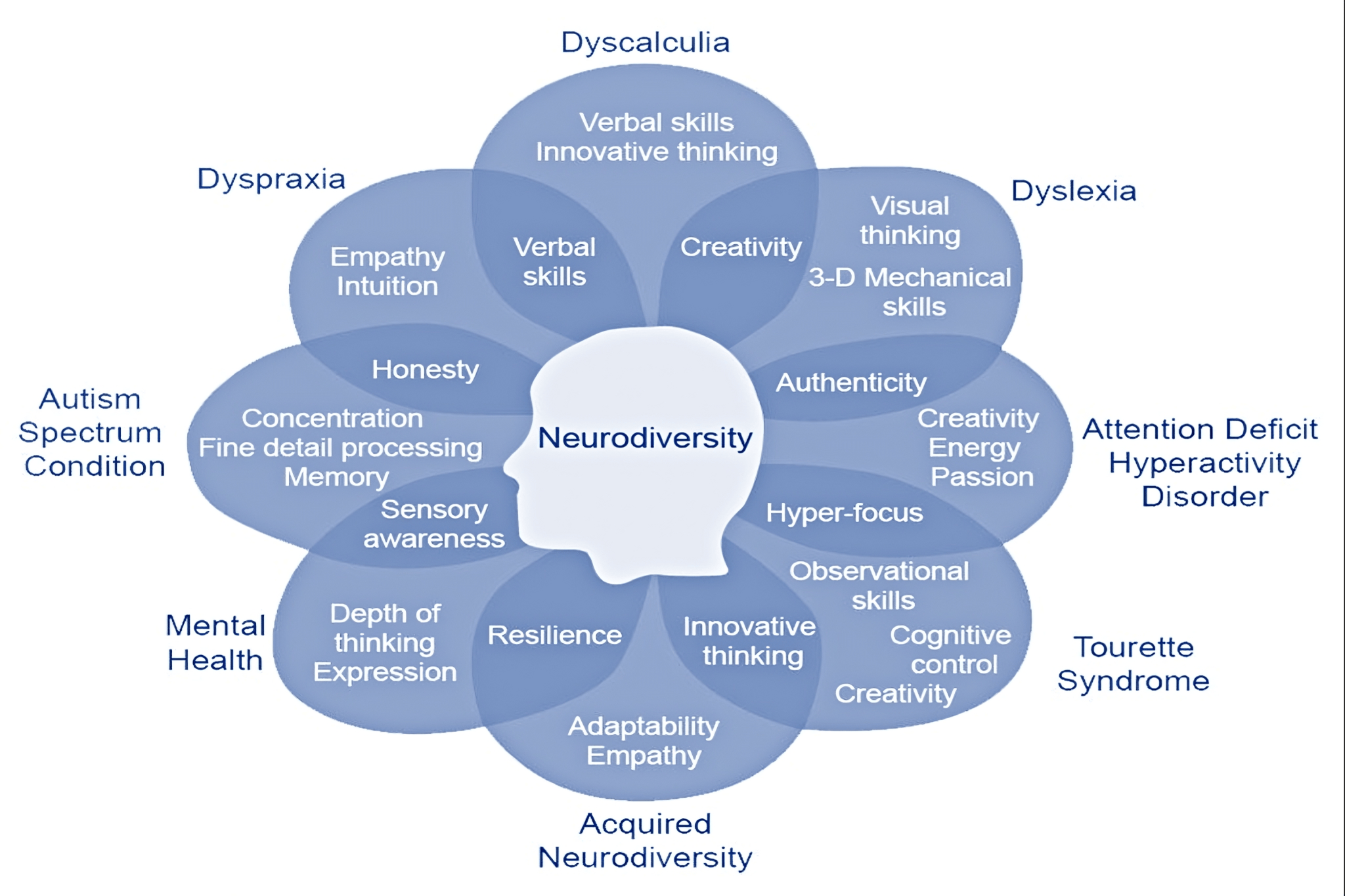
‘Neurodivergence’ has gained more traction recently, with a greater understanding and acceptance of neurological differences. This term speaks to natural variations versus deficits of human experience. Image Credit: John Hopkins University
We author these terms. We debate them. Sometimes, we repurpose them. And we must do that in debating at a System 2 level. Before these terms quietly settle into System 1. Into us. In doing so, we’re not talking about the world. We’re telling it who we are right now and who we are trying to become.
